

Author: Mountain Camp
Why Our Kids Need Nature, Wonder, and Awe
Imagine your child standing beneath towering pine trees, listening to the wind move through the forest, or looking up at a sky full of stars near Lake Tahoe. Those moments of wonder aren’t just beautiful—they’re deeply meaningful. Research shows that experiences of awe in childhood support emotional well-being, curiosity, and resilience. Awe helps children feel connected to something bigger than themselves, which can reduce stress and promote a sense of calm and perspective (Psychology Today, 2023).
Awe plays a powerful role in social and emotional development. Studies suggest that when children experience awe—often through nature—they become more empathetic, generous, and cooperative. Feeling small in the presence of something vast, like mountains or ancient trees, helps kids shift their focus away from themselves and toward others, strengthening kindness and social connection (Greater Good Science Center, “Feeling Awe Might Help Kids Be More Generous”).
Beyond awe itself, regular time in nature helps children thrive. Outdoor experiences are linked to improved attention, reduced anxiety, better emotional regulation, and increased happiness. Nature offers kids a break from constant stimulation and screens, allowing their nervous systems to reset. Even short moments outdoors—unstructured play, quiet observation, or creative exploration—can have lasting positive effects on mental health and overall development (Greater Good Science Center, “How Moments in Nature Help Kids Thrive”).
Nature also supports learning in ways that classrooms alone cannot. When children explore outdoors, they naturally practice problem-solving, creativity, collaboration, and scientific thinking. Climbing over logs, noticing animal tracks, or asking questions about plants encourages curiosity and confidence. These hands-on experiences help children build independence and a lifelong love of learning rooted in real-world discovery (Psychology Today, 2023).
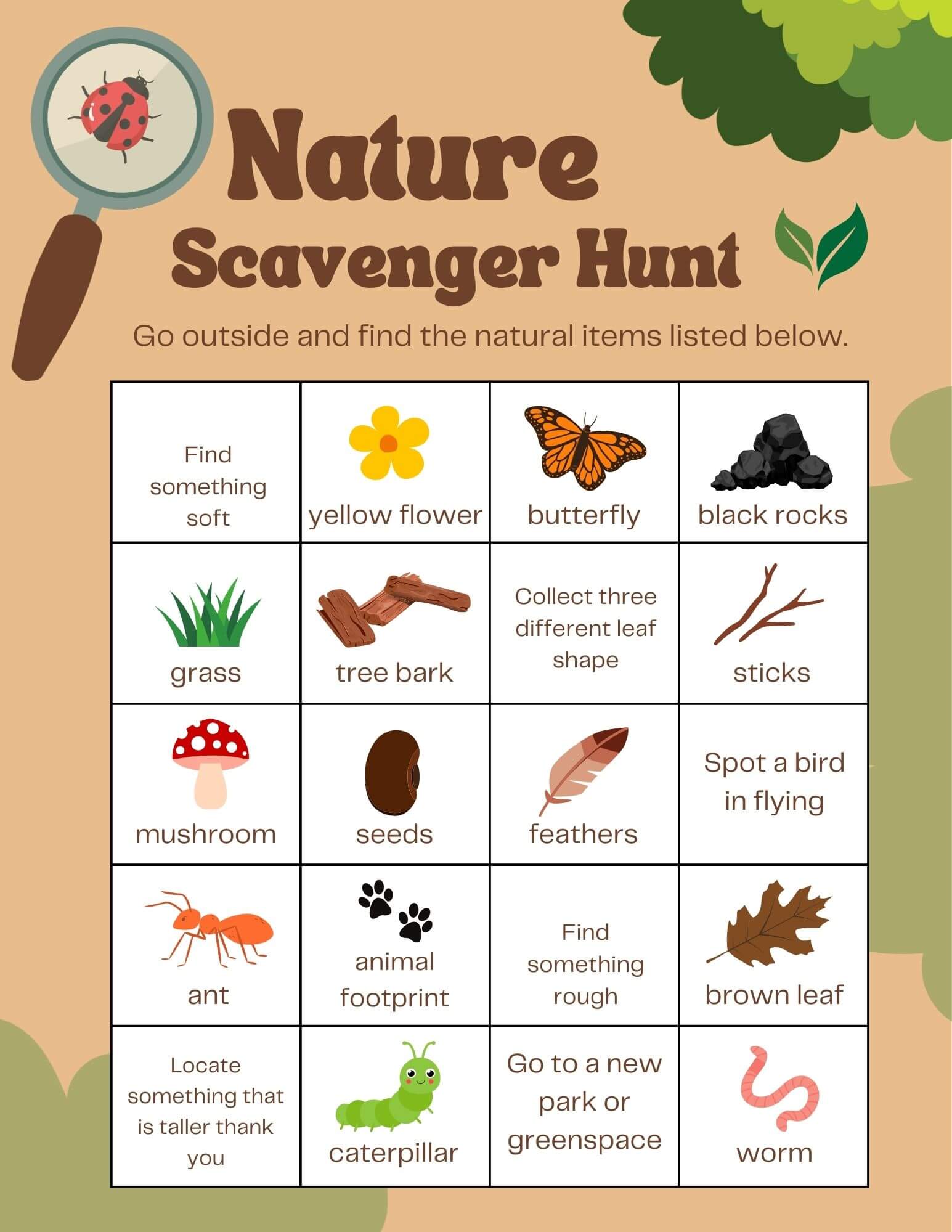
At Mountain Camp, we see these benefits come to life every summer. Time spent hiking forest trails, playing beneath tall trees, and marveling at the natural beauty around Icehouse Reservoir gives children space to experience awe, build resilience, and grow in confidence. We encourage families to continue these experiences at home—get outside together, slow down, and notice the wonders around you. To get started, try completing the Nature Scavenger Hunt we’ve attached and see where curiosity and awe take your family next!
Sources
- Psychology Today. 11 Benefits of Experiencing Awe in Childhood (2023), https://www.psychologytoday.com/us/blog/beyond-school-walls/202303/11-benefits-of-experiencing-awe-in-childhood
- Greater Good Science Center, UC Berkeley. Feeling Awe Might Help Kids Be More Generous, https://greatergood.berkeley.edu/article/item/feeling_awe_might_help_kids_be_more_generous
- Greater Good Science Center, UC Berkeley. How Moments in Nature Help Kids Thrive, https://greatergood.berkeley.edu/article/item/how_moments_in_nature_help_kids_thrive
Around the Table: How Shared Meals Strengthen Our Camp Community
At camp, when we gather for meal time, something magical unfolds: bonds deepen, laughter flows, and a sense of belonging grows.
Why Shared Meals Matter
Recent research confirms what so many of us have felt — sharing meals is a powerful way to build connection, belonging, and well-being. According to the 2025 World Happiness Report (WHR), people who dine with others frequently report significantly higher life satisfaction, more positive emotions, and less negative affect — across ages, cultures, and countries (6).
Eating together doesn’t just feed our bodies — it nurtures our social bonds. Numerous studies describe communal dining (sometimes called commensality) as a key ritual for forging and reinforcing trust, friendship, and sense of belonging (3).
Moreover, communal meals offer more than emotional benefits. For children and teens, regularly eating family-style meals — where everyone sits and eats together — is linked to better mental health, healthier eating habits, reduced risky behaviors, and even improved academic performance (1).
How This Aligns with Our Mountain Camp Philosophy
When we look at our history and philosophy, we’re reminded that our camp was founded not just as a place to play and learn, but as a place to belong. On our “About” page, we talk about the importance of community, and our family-style meals reflect those values intentionally. At each table, campers and counselors share food, stories, questions, and experiences. These moments often become the seeds of friendships, trust, and the kind of community that lasts long after camp is over. As our campers often say, “we start the week as a table full of strangers and end the week as a little family” and we always start each meal sharing “shout-outs”, highlighting what and who we are grateful for.
In a world where more and more people dine alone, surrounded by screens or time constraints, our camp offers real, unhurried time together. Research suggests this matters: shared meals can improve emotional well-being, reduce loneliness, and strengthen social support networks (5).
What Happens at Our Tables
Here’s what typically happens when we sit down together at camp:
- Conversation & Listening. From tales about the day, hopes for the summer and beyond, to stories about home, mealtime becomes a space for sharing and reflection.
- Learning & Caring. Campers learn to serve themselves, pass dishes, and respect each other’s needs. Manners are modeled by counselors, and campers leave their time at camp more conscious and aware of the needs of others, and hopefully with bellies full of delicious food too!
- Laughter & Play. Jokes, spontaneous songs, silly games — these lighten the mood and help break down barriers. Do you know the some of our songs we sing at camp? If not, ask your camper, it’s a great way to pass the time as you wait to be dismissed to do your dishes!
- Belonging & Trust. Over time, campers begin to feel seen and valued. At Mountain Camp, meals are a great time to slow down and talk with your cabin mates. At our partner camp, Farm Camp, campers eat meals at smaller tables with people outside of their unit groups. These small table sizes, and a mix of ages and genders at the table, campers have the opportunity to be seen and heard by people with whom they otherwise may not have interacted. They make connections outside of their unit groups and have another touch point in the community.
These moments embody the spirit of our camp: cooperation, respect, shared growth, and belonging within the community.
Why It Matters
The benefits ripple beyond camp. Campers develop the habits of sharing meals, listening, and connecting, which helps young people build social confidence, empathy, and a sense of belonging. These are qualities that matter deeply in adulthood. Research shows that regular communal eating supports better mental health, more stable relationships, and overall well-being (2&4).For our camp community, shared meals anchor us. They remind us that we’re more than a group of individuals working or playing together. We are growing, caring, learning — together.
This month we wanted to share a beloved camp recipe from the Farm Camp Recipe Book with you and your family; Cinnamon Rolls! We hope that you’ll be able to bake these together and share them with those you love this holiday season. And be sure to check out Farm Camp when you are looking ahead to your summer plans!

- Bernardi, Elisabetta, and Francesco Visioli. “Fostering Wellbeing and Healthy Lifestyles through Conviviality and Commensality: Underappreciated Benefits of the Mediterranean Diet.” Nutrition Research, vol. 126, 1 June 2024, pp. 46–57, https://doi.org/10.1016/j.nutres.2024.03.007.
- Dunbar, R. I. M. “Breaking Bread: The Functions of Social Eating.” Adaptive Human Behavior and Physiology, vol. 3, no. 3, 2017, pp. 198–211, link.springer.com/article/10.1007/s40750-017-0061-4, https://doi.org/10.1007/s40750-017-0061-4.
- Jönsson, Håkan, et al. “What Is Commensality? A Critical Discussion of an Expanding Research Field.” International Journal of Environmental Research and Public Health, vol. 18, no. 12, 9 June 2021, p. 6235, www.mdpi.com/1660-4601/18/12/6235, https://doi.org/10.3390/ijerph18126235.
- “Shared Meals: A Predictor of Subjective Well-Being.” Center for Health & Well-Being, 2025, www.ie.edu/center-for-health-and-well-being/blog/shared-meals-a-predictor-of-subjective-well-being/.
- UCL. “Sharing Mealtimes with Others Linked to Better Wellbeing.” UCL News, 20 Mar. 2025, www.ucl.ac.uk/news/2025/mar/sharing-mealtimes-others-linked-better-wellbeing.
- “World Happiness Report 2025: People Are Much Kinder than We Expect, Research Shows | Saïd Business School.” Ox.ac.uk, 20 Mar. 2025, www.sbs.ox.ac.uk/news/world-happiness-report-2025-people-are-much-kinder-we-expect-research-shows.
Why Families Choose Mountain Camp: The Power of Camp Done With Purpose
Choosing a summer camp is choosing a community that will shape your child’s growth. At Mountain Camp, we believe camp is one of the most powerful educational experiences available to young people today. Our program is built on five core values—Community, Education & Growth, Integrity, Connection, and Sustainability & Adaptability—and every day at camp is designed to bring these values to life.
A Community Where Kids Belong
Community is the heart of Mountain Camp. We create a diverse and inclusive environment where every camper feels seen, supported, and empowered. In this kind of community, kids learn collaboration, communication, empathy, and leadership—essential 21st Century Skills that help them thrive long after camp ends.
Camp as Education
Camp is the ultimate hands-on classroom. Through play, exploration, and challenge, campers gain independence, self-reliance, resourcefulness, creativity, and critical thinking. These skills grow naturally when children’re navigating real experiences—trying new activities, solving problems with peers, or stepping outside their comfort zones.
We also back our work with research. Mountain Camp partnered with the Stanford Graduate School of Education and Challenge Success in a multi-year study that confirmed the strong social and emotional growth that happens at camp. Traits like curiosity, perseverance, optimism, gratitude, and social intelligence are intentionally nurtured here.
Integrity and Joy in Every Moment
We model honesty, responsibility, perseverance, and service in everything we do—and we pair it with the silliness and fun that define the camp experience. Campers see what it looks like to live with integrity and to be part of a caring community.
Deep Connection—Unplugged and Outdoors
Without technology, campers are fully present: making friends, exploring nature, and discovering their own strengths and purpose. This deliberate unplugging gives them space to recharge, focus, and connect in a way that’s increasingly rare.
Growing With Kids and Families
We design our program to be flexible and responsive, ensuring it meets the evolving needs of today’s campers. Our structure, staff training, and activities all work together to support healthy lifestyles, positive self-image, and meaningful personal growth.
Why Camp Matters
Camp gives children what they need most: a supportive community, opportunities for challenge and growth, time in nature, and caring adults who guide them with intention. Mountain Camp provides the best possible environment for kids to practice the skills that help them succeed in school, relationships, and life.
Don’t just take our word for it, check out this video summarizing our research with Stanford University and Challenge Success on the power of camp!
Nervcited! Starting the Camp Countdown Chat with Your Camper
If your child is attending camp for the first time they might be starting to feel butterflies in their tummy. What is it going to be like? Am I going to make friends? What if it’s scary? Will my counselors help me?
These are all completely understandable questions and we’d be surprised if your camper didn’t feel a little nervous for the experience. Simply by coming to camp your child is stepping out of their comfort zone and taking what feels like a risk. They don’t know what the outcome will be and therefore it feels new, exciting and possibly scary too.
However, we know that children who step out of their comfort zones and engage in healthy risks build greater resilience, confidence, decision-making skills and are more tolerant to stressful situations in the future (1).
As an article from the American Camp Association states, “Resilience is the answer to the doubts we have as parents. Won’t he miss me? What if she gets sick? Homesickness, bug bites, disappointments, and injuries all can be weathered without mom or dad. As the camp doctor at a fantastic overnight camp, I can tell you that kids do look for a parent in those moments. And then they surprise themselves as they turn to counselors, new friends, and their own inner strength to get through and get over the hardships. What pride and self-confidence they discover as they learn of their own resilience” (2). While we know that the outcomes can be great, the process isn’t always easy.
In order to best set new campers up for success it’s important to be open with them about what they may face in this very new environment. Yes, they will have a really great time and sometimes they might really miss home while they’re doing it. And yes, they will make friends, and they might occasionally have a disagreement/differing opinion with one of their unit mates. It’s okay to have these conflicting experiences at once – they are in a safe place to process it. Just because you have difficult moments or feelings that you don’t enjoy, doesn’t mean that the whole experience is bad or that you’re not brave enough to be there!
While at camp, your camper is surrounded by adults who genuinely care about them. Our staff has been trained in how to help when a camper feels homesick or is having conflict with another camper. They also make sure to celebrate the moments, big or small, when your camper has learned something new, gone on their first big hike, or gotten on stage to perform in the drama. If your camper is ever experiencing feelings that are difficult to process, we have a team of directors who will stay with your camper for as long as it takes to work through those emotions. Then we’ll make a plan on how to move forward. We’re always here and ready to help whenever your camper needs it.
We’ve found that campers who have talked through their anxieties, goals and hopes for camp before arriving are often better at processing those tough emotions independently when they arise. Reminding your camper that they’re brave even when they miss home, and that they’re strong enough to keep going is awesome. Similarly, a reminder that their counselors and the leadership team are here to support them whenever they need it is great too. Below we’ve listed some questions that might help start the conversation!
- What are you MOST excited for?
- What are you most nervous about?
- What do you think it’ll be like living in a cabin for a week or two?
- I know we’ll miss each other while you’re gone but I know you’re going to have so much fun. You’re brave and strong and we know that you can do it. What are some things that might help if you get a little sad while you’re there?
- Are you interested in making new friends? What are some ways you could do that?
- What would you do if there was someone who you don’t get along with?
- On the first night of camp there will be a cabin meeting in your cabin where everyone gets to talk about how to live together. Do you have any ideas on what rules you think might be helpful?
- Is there anything you want to be sure your counselor(s) know about you?
- Are there any new things you want to try? New food, skills, etc.
- What’s one thing you want to make sure to accomplish before you go home?
- Make sure you tell your counselor when you get there so that they can help you with that goal!
This is just a jumping off point as you and your camper consider what their camp experience might be like. Campers may have times where camp is a huge challenge for them, but often those are the moments where they’re growing the most. Ultimately, we hope that “learning respect, resilience, and responsibility at camp will establish each (camper) as a person who can achieve his or her dreams” (2). We’re proud of you and your camper for taking this leap and trying something new! We can’t wait to see you this summer!
- “Bright Horizons | Risk Taking in Early Childhood: When Is It Appropriate? | Bright Horizons?” Brighthorizons.com, Bright Horizons, 2024, www.brighthorizons.com/article/children/risk-taking-benefits-children.
- Gilboa, Deborah. “Imagine Respect, Inspire Resilience, Impact Responsibility.” American Camp Association, 29 Sept. 2015, www.acacamps.org/article/camping-magazine/imagine-respect-inspire-resilience-impact-responsibility.
How to Make Friends at Mountain Camp: 10 Tips & Tricks for an Amazing Summer!
Heading to mountain camp is an adventure like no other! You’ll spend your days hiking, swimming in the lake, sitting around the campfire, and trying awesome activities like rock climbing, archery, or arts and crafts. But one of the best parts of camp? The friendships you make along the way!
Making friends at camp isn’t just about having people to hang out with—it’s what makes camp special. The friends you meet in your cabin or on the trails might turn into lifelong buddies, and camp memories are always better when you share them with others.
But let’s be real—meeting new people can feel a little scary at first. What if you don’t know anyone? What if you’re not sure what to say? Don’t worry! Most campers are in the same situation, and with a few simple tricks, you’ll be making friends in no time.
- Be Friendly and Say Hi
It might sound simple, but the easiest way to make a new friend is just to say, “Hi, I’m [Your Name]!” A big smile and a friendly attitude go a long way. Your cabinmates and activity groups are all looking for friends too, so don’t be afraid to introduce yourself and start talking!
- Ask Open-Ended Questions
One of the best ways to start a conversation and get to know someone is by asking open-ended questions—ones that need more than just a “yes” or “no” answer. Instead of asking, “Do you like the lake?” try, “What’s been your favorite part of camp so far?” or “What activities are you most excited for?” Questions like these keep the conversation going and help you find common interests, and maybe you will even sign up for the same activities!
- Get to Know Your Cabinmates
Your cabin is like your camp family. You’ll be sleeping in bunks next to each other, eating meals together, and spending time hanging out before bed. Make an effort to talk to everyone in your cabin. Ask where they’re from, what their favorite camp activity is, or if they’ve been to camp before. The more you get to know each other, the more fun your time together will be!
- Invite Others to Join You
If you’re heading to an activity, walking to the dining hall, or starting a game, invite others to come along! Saying, “Hey, want to go to archery with me?” or “We’re about to play a card game—want to join?” makes people feel included. You don’t have to wait for others to ask you—take the first step and invite them!
- Join in on Games and Activities
Camp is full of fun things to do, and the best way to make friends is by jumping into activities. Whether it’s a game of capture the flag, a group hike, or a swim in the lake, participating helps you meet people who like the same things as you. Plus, teamwork and shared experiences bring people closer together!
- Be a Good Cabinmate
People love being around someone who is kind and thoughtful. Be the kind of person you’d want as a friend! That means including others in conversations, helping out when needed, and being respectful of your cabinmates’ space. If you notice someone looking left out, invite them to join your game or sit with you at mealtime.
- Don’t Be Afraid to Be Yourself
Camp is a place where you can be YOU. You don’t have to impress anyone—just be yourself! Whether you’re goofy, adventurous, creative, or quiet, you’ll find people who appreciate you for who you are. Being real is the best way to form genuine friendships.
- Try New Things and Meet New People
It’s easy to stick with the same people once you make a friend or two, but camp is a great chance to meet lots of different people. If you sign up for a new activity, sit with different people at lunch, or join in on a group game, you’ll keep meeting more friends.
- Be Patient—Friendships Take Time
Sometimes, making friends happens fast, and other times it takes a few days to feel comfortable. That’s totally normal! If you don’t click with someone right away, don’t worry—there are lots of campers and plenty of time to make connections. Just keep being friendly, trying new things, and having fun.
- Have Fun and Enjoy Camp!
When you’re having fun, people will want to be around you. Laugh, play, and make the most of every moment. Camp is all about adventure, and the friendships you make along the way will be the best part of it all!
So get out there, be yourself, and enjoy every second—your new camp friends are waiting for you!
Disconnect to Reconnect: The Impact of Being Surrounded by Nature
At Mountain Camp, everything we do is outside. We eat outside, play outside, and sometimes even sleep outside! We love that we’re able to fully connect with nature in all the various aspects of our camp lives. During our weeks at camp, we’re not just surrounded by nature, we’re fully immersed. And we can say with first hand experience, the benefits are immense.
At camp we’re able to disconnect from screens and spend more time face to face with one another. We collaborate with each other at meals, share our spaces kindly and to accomplish big things (like going to camp for the first time) together! We spend less time worried about getting to the next thing and instead get to take our days slowly and more mindfully. When children are disconnected from technology their creativity thrives. As stated in an article from the Child Mind Institute, an “unstructured style of play also allows kids to interact meaningfully with their surroundings. They can think more freely, design their own activities, and approach the world in inventive ways” (1). One of the places where we see this creativity really come out at Mountain Camp is at the Forts.
Forts is a big area up in the woods filled with leaves, sticks and huge trees – no playground equipment in sight. Over the decades camp has been running, campers have turned this space into a fort building paradise. Campers often go to this activity with their unit mates and collaborate to create huge forts using just the things they can find on the ground. It’s not only fun and a great way to deepen connections with one another, it’s impressive too! Several campers have turned a bunch of branches and sticks into triple decker forts with fence lines, shelter areas, and places to hide their treasures.
Campers also report feeling less stressed at camp than anywhere else, and they tell us that they sleep better here too! It can be hard to say what exactly is the main cause of these benefits, as there are so many reasons that could be the case at camp. We have long, physically active days and three wonderfully healthy meals. We’re surrounded by friends and get to fall asleep giggling with one another while reflecting on everything we’ve accomplished. We’re reading instead of scrolling. And we’re more aligned with our circadian rhythms; up just a bit after sunrise and asleep an hour or two after sunset.
For our two-week campers, all campers have the opportunity to go on an overnight at camp which presents the perfect chance to be 100% immersed in nature. This involves paddling out to the other side of the lake (or going to Mountain Camp’s waterfront for our younger campers) and sleeping out under the stars, cowboy style. Each night, we can see the milky way, and if we are lucky, a few shooting stars! Having this opportunity to watch the sunset and just marvel in the beauty of the forest while giggling and bonding with their cabins is a memory that many campers never forget, for good reason!
In a comprehensive study done by Marcia Jimenez, they found associations “between nature exposure and improved cognitive function, brain activity, blood pressure, mental health, physical activity, and sleep” (3). And in an article by the American Psychological Association they stated; “people who feel more connected to nature have greater eudaimonic well-being—a type of contentment that goes beyond just feeling good and includes having meaningful purpose in life (Journal of Happiness Studies, online first publication, 2019)” (4).
Our connection to nature doesn’t have to be something we just experience at camp. We can go on a family camping trip, go for a walk in our neighborhood park, have a picnic, or take part in a local clean up on earth day. Even just 15 minutes of time in nature per day can significantly improve our cardiovascular health by reducing our blood pressure and resting heart rate (2). Nature is part of who we are and we’re grateful to be able to share our love of nature with all of you. As San Francisco native Gary Snyder states; “”nature is not a place to visit, it is home”, we couldn’t agree more.
- Cohen, Danielle. “Why Kids Need to Spend Time in Nature.” Child Mind Institute, 9 Feb. 2016, childmind.org/article/why-kids-need-to-spend-time-in-nature/.
- “How Even Just 15 Minutes in Nature Can Boost Your Wellbeing.” Loughborough University, 3 Jan. 2025, www.lboro.ac.uk/news-events/news/2025/january/how-short-time-in-nature-boost-wellbeing/.
- Jimenez, Marcia P. “Associations between Nature Exposure and Health: A Review of the Evidence.” International Journal of Environmental Research and Public Health, vol. 18, no. 9, 30 Apr. 2021, www.ncbi.nlm.nih.gov/pmc/articles/PMC8125471/, https://doi.org/10.3390/ijerph18094790.
- Weir, Kirsten. “Nurtured by Nature.” American Psychological Association, vol. 51, no. 3, 2020, www.apa.org/monitor/2020/04/nurtured-nature.
The Empowerment of Gratitude: Building Community Through “Shout Outs”
In a world that often rushes us forward, it’s easy to overlook the importance of gratitude—a powerful tool that can transform our relationships, our mindset, and our experiences. At Mountain Camp, we embrace gratitude as a core value, using a unique tradition we call “shout outs” to foster a sense of community, appreciation, and openness. This is your friendly reminder to not let your attitude of gratitude frizzle out when the holidays wrap up.
Every meal at camp is an opportunity to celebrate each other and recognize the beauty of our shared experiences. As we gather around the table, we kick off our meals with shout outs, where campers and staff take turns expressing gratitude for one another. This simple yet profound practice not only sets a positive tone for the meal but also cultivates an environment where every voice is heard and valued.
Imagine this: a young camper stands up and shares how grateful they are for a friend who helped them overcome their fear of heights during a ropes course session. Another camper expresses appreciation for the counselor who took the time to listen when they felt homesick. These moments of recognition do more than just brighten someone’s day; they weave a tapestry of connection that enriches our camp community.
The beauty of shout outs lies in their ability to empower individuals. By openly acknowledging the efforts and qualities of others, we create a culture of appreciation that encourages everyone to contribute positively. This environment fosters self-confidence and promotes a mindset of openness—an eagerness to try new things, take risks, and support one another in our adventures. When we express gratitude, we not only uplift those around us but also empower ourselves to embrace challenges and growth.
This empowerment extends beyond our meals at camp. Imagine carrying this practice into our daily lives. In our fast-paced world, we often forget to pause and appreciate the people and experiences that shape us. Whether it’s a colleague who goes the extra mile, a friend who lends a listening ear, or even the natural beauty that surrounds us, taking a moment to express gratitude can shift our mindset and enhance our overall well-being.
To help cultivate this empowering gratitude in your own family, consider incorporating shout outs into your mealtime rituals. Take turns sharing something positive about each person at the table or express gratitude for the day’s experiences. This practice not only strengthens family bonds but also encourages an open dialogue about feelings, achievements, and growth.
As we reflect on our experiences at camp and the lessons we carry with us, let us remember the power of gratitude. It’s more than just a polite gesture; it’s a transformative practice that can create a ripple effect of positivity in our communities.
So, as you gather with loved ones around the dinner table during this holiday season, we invite you to embrace the spirit of shout outs. Celebrate the people in your life, recognize the environment you inhabit, and cultivate a mindset open to new experiences. Together, we can build a culture rooted in appreciation and empowerment—one shout out at a time.
Join us in this journey of gratitude, and let’s create a community where every voice is valued, every effort is recognized, and every heart is open to the beauty of connection. Share your shout outs with us on social media using #GratitudeAtCamp, and let’s inspire one another to acknowledge the good in our lives, every day!
Outdoor Cooking at Camp
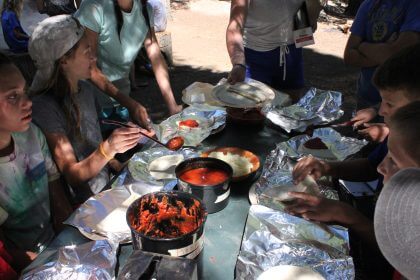
Outdoor cooking is an exciting activity at Mountain Camp which gives campers the opportunity to prepare, cook and eat their own food. It is a popular activity which is offered for each age group at Outdoors sign-ups, runs for one and a half hours and attracts approximately 25 campers each activity period.
Both sweet and savory treats are cooked at outdoor cooking including banana boats, chocolate chip brownies inside an orange, popcorn balls and the most popular foods are pizza pockets and s’moretillas.
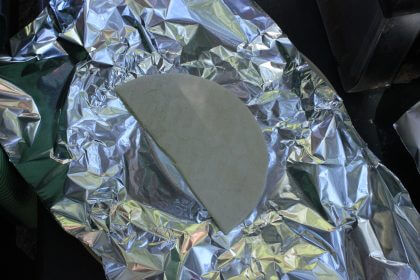
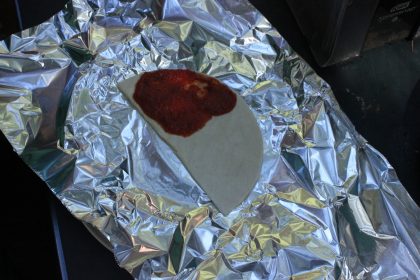
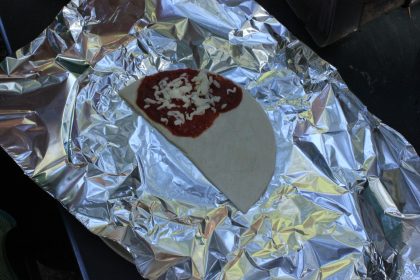
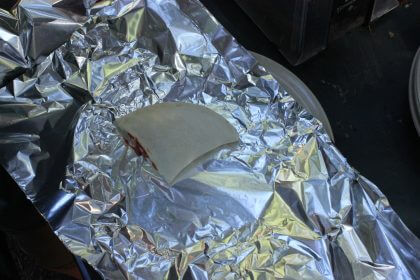
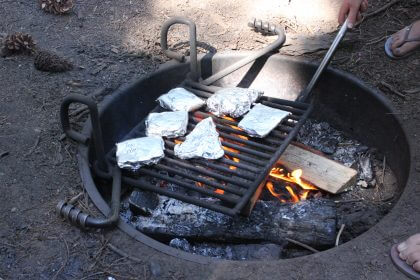
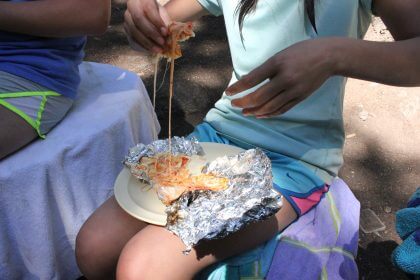
To make pizza pockets campers add pizza sauce and their choice of cheese and/or pepperoni onto half a pizza base. This is then folded over, the edges are sealed to trap all of the pizza-goodness, wrapped in aluminum foil and finally placed on the grill over the fire to crisp and turn a golden – brown. Campers then bite into the melted cheese/pepperoni goodness and each pocket is always devoured!
Step 1:
Step 2:
Step 3:
Step 4:
Step 5:
Step 6:
Step 7:
Step 8:
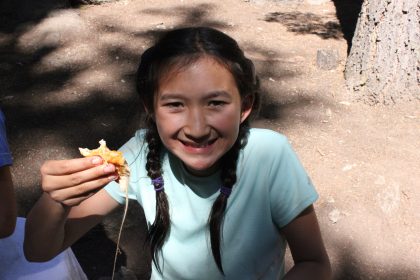
Happy, smiling faces are always on display at the end of outdoor cooking after the campers devour their delicious treats!!
The Ropes Course
Attention first year, and returning campers alike!
Our Ropes Course was given a facelift in the months prior to the Summer 2016 session. This brief blog will highlight a few of the most exciting changes our campers will find down at Ropes this year.
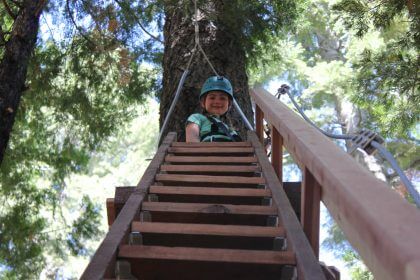
Our Zipline, the centerpiece of the Mountain Camp Ropes Course, has now been extended by about 40 feet. The extension of our line has allowed climbers to smoothly zip all the way to the ground, gently landing on their own two feet.
Grandest of all the updates were the changes made to our Lobster Claws course.
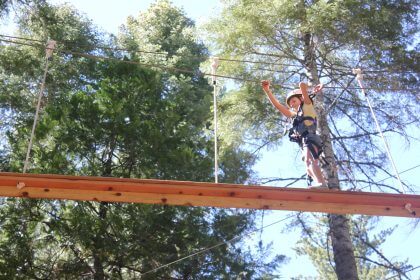
The Lobster Claw course is essentially all of the elements anchored in the tree canopy at the Ropes Course that are not within reach of the ground. While the majority of the elements of our course are the same, the belay system that our climbers use to safely negotiate these off the ground obstacles has been replaced by a new system: the C-Hook (the latest advancement in challenge course tech). By adopting the C-Hook system we have been able to eliminate the requirements that came along with our old Lobster Claw course. No longer will blazers be turned away because of the height requirement, nor will one week campers be prevented from accessing areas of our course that required longer training. The new belay system also gives our climbers a more complete autonomy up in the trees. Campers choose the elements that they traverse across, and transfer their own C-Hook’s accordingly.
Age Group Songs
Singing and chanting is one of the aspects of camp that make it such a unique place and keeps it so different from school and everyday life. Rarely do you eat every meal with 300 other people, and spend more of it standing up, chanting, dancing or singing than you do sitting down and eating your delicious meal.
At Mountain Camp campers are divided into three different age groups, the Trailblazers, Trackers and Alpiners, each with their own song. Age groups get a chance to practice their song on Sunday as soon as they arrive at camp and then spend all week belting it out at mealtimes, competing with other campers to see who can sing the loudest.
The age group songs have been around as long as Mountain Camp and all have their own unique and special quirks. Why read about it when you can WATCH IT in action! Check out of video below of the session 3A Trailblazers singing the Trailblazer song with their counselors.